

PY-YD-230 Electric Dialysis Chair
PY-YD-230 is the chair we quote when the unit wipes every surface with chlorine between sessions and needs the left and right armrests in different positions. Each armrest runs on its own gas spring, so one can be lifted for a fistula while the other stays flat as an armrest. The upholstery is PVC rather than PU, the footrest extends 100 mm on its own actuator, and the seat height is the same fixed 550 mm as the PY-YD-211.
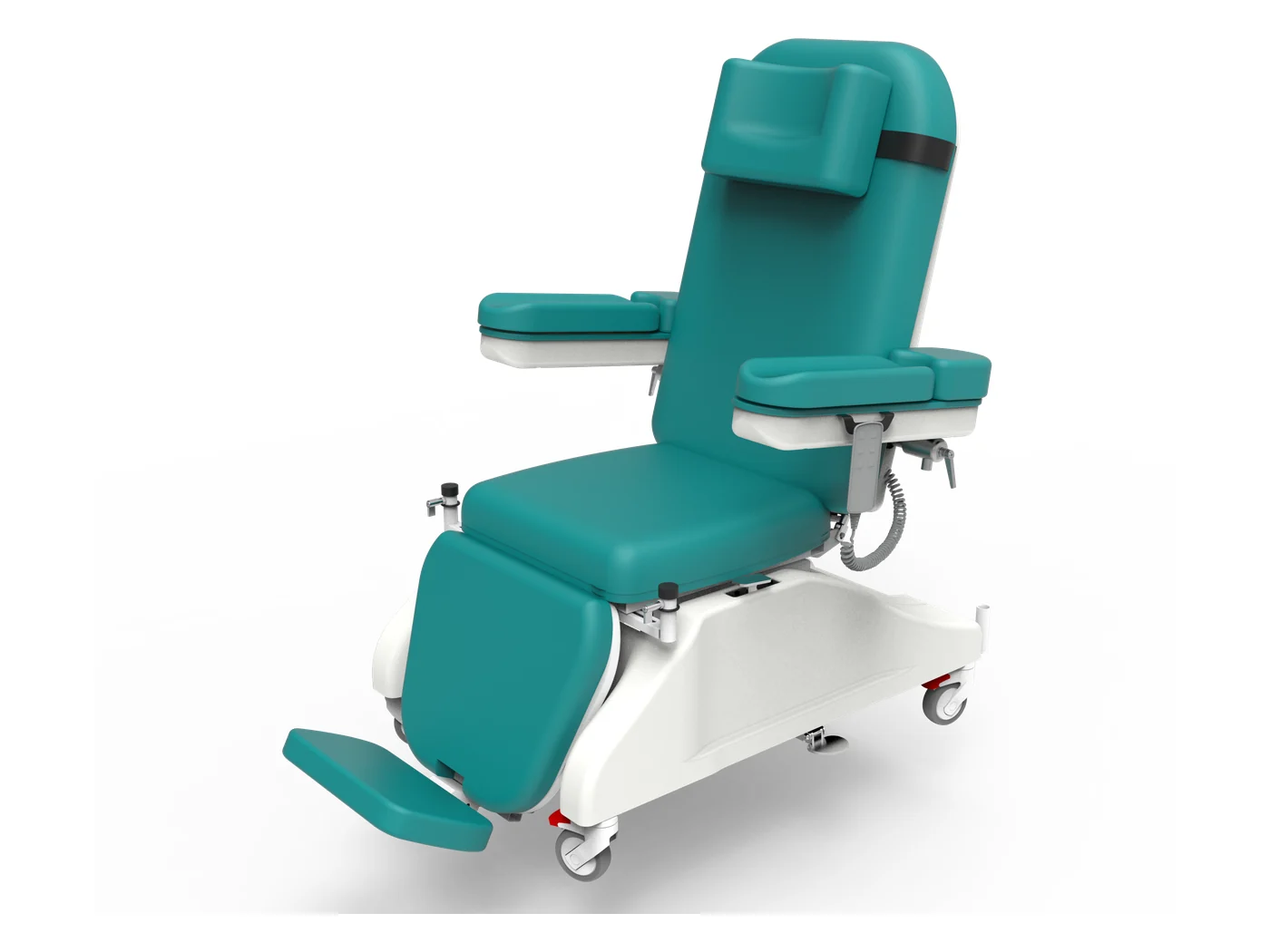
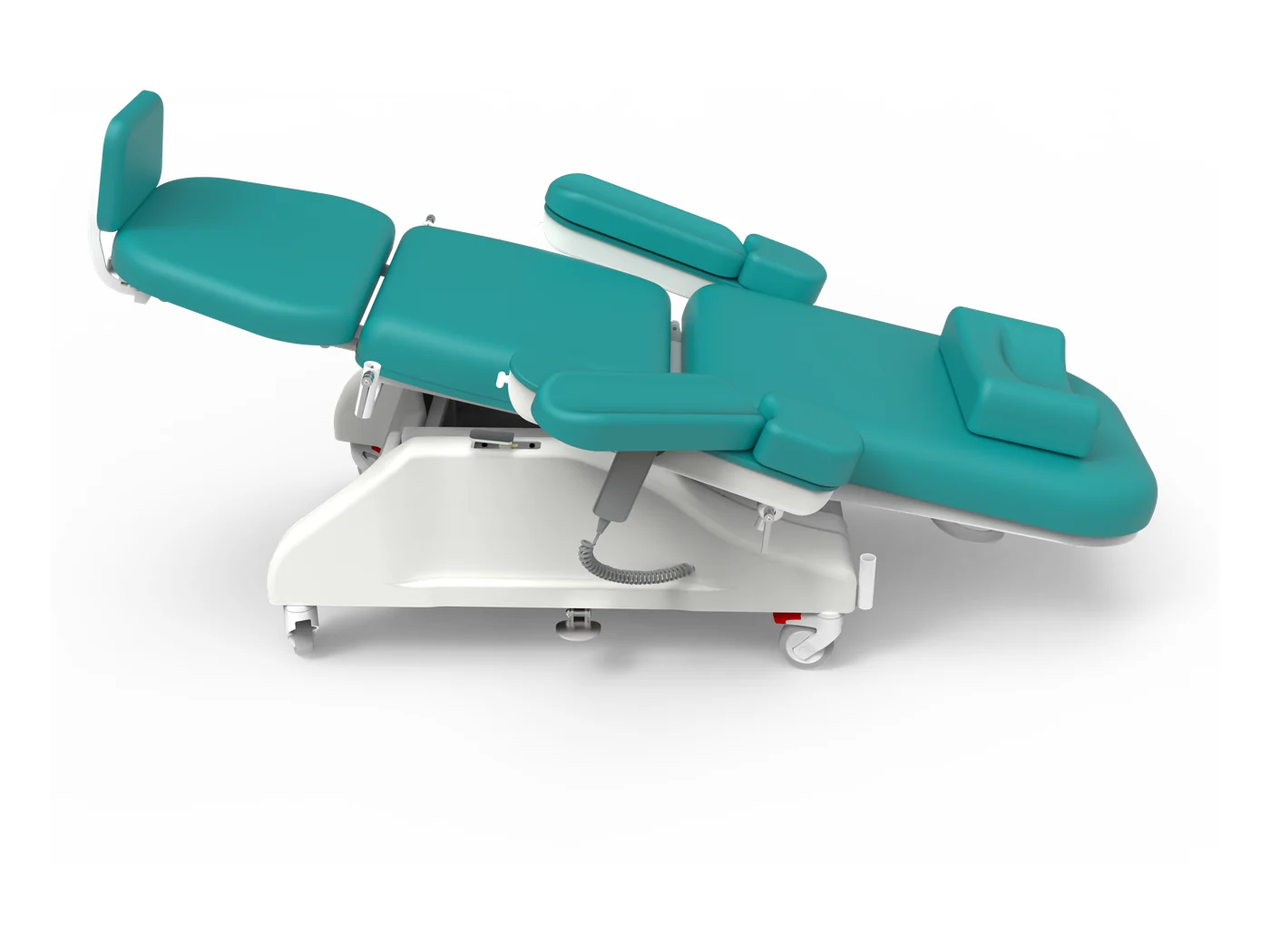
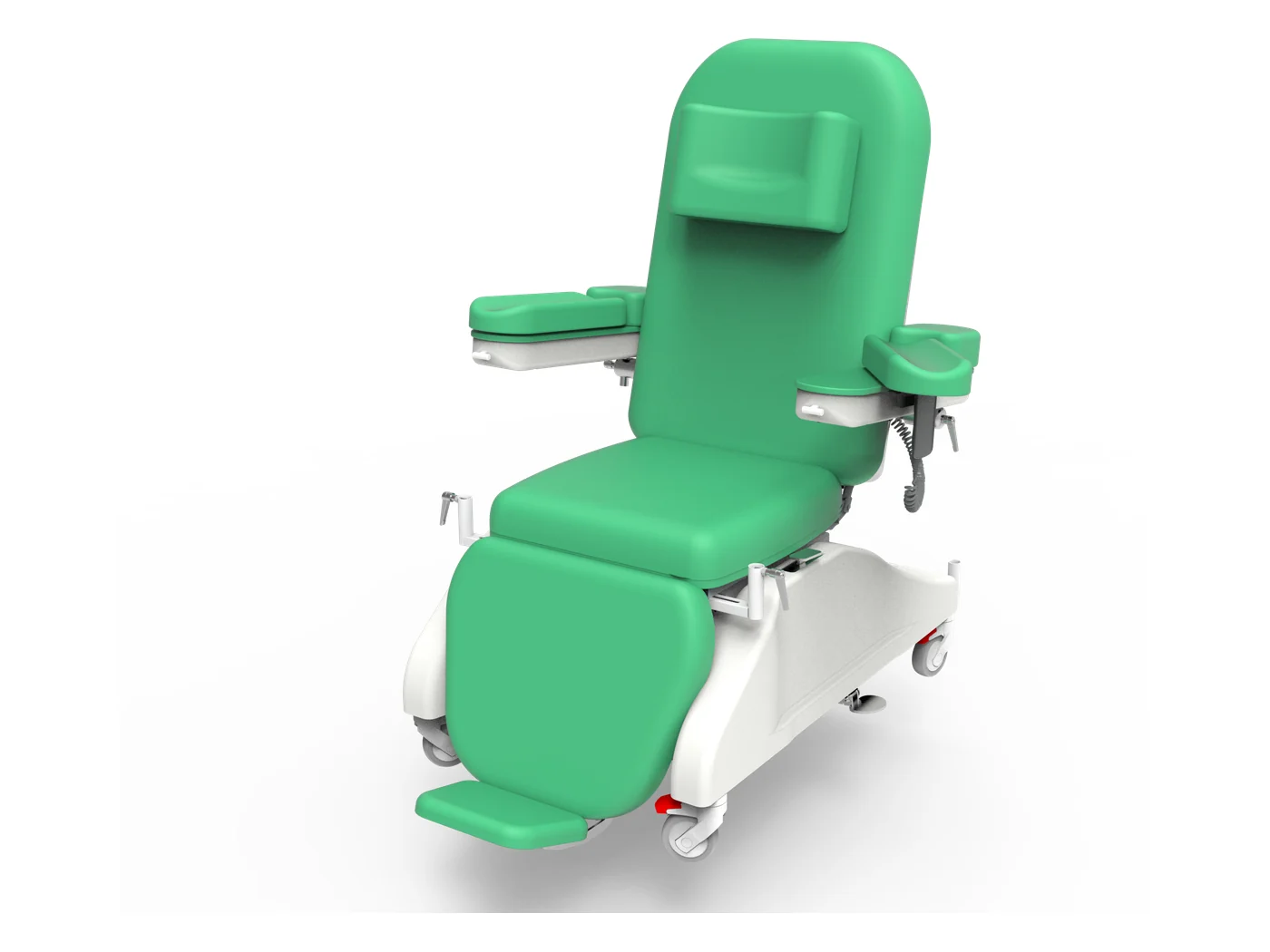
PY-YD-230 in Aqua Green — double-layer armrests, 900 mm over the armrests, 70 kg net
At a glance
- Two independent gas springs — left and right armrests set separately
- 3 actuators — backrest −12° to 75°, leg rest −70° to 12°, telescopic footrest 0–100 mm
- PVC upholstery — holds up to repeated chlorine wiping
- 240 kg safe working load at a fixed 550 mm seat height
Every position, including zero gravity
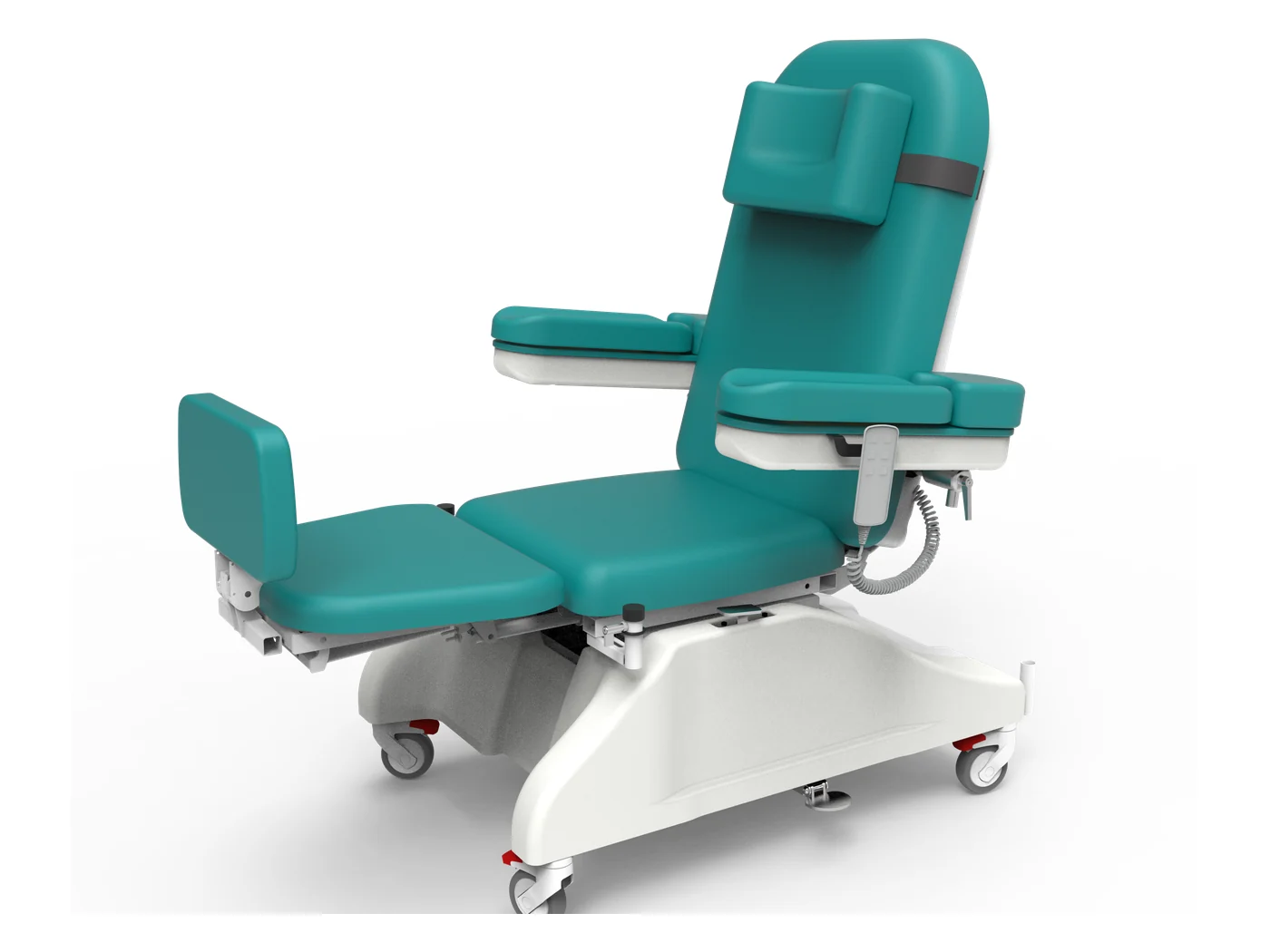
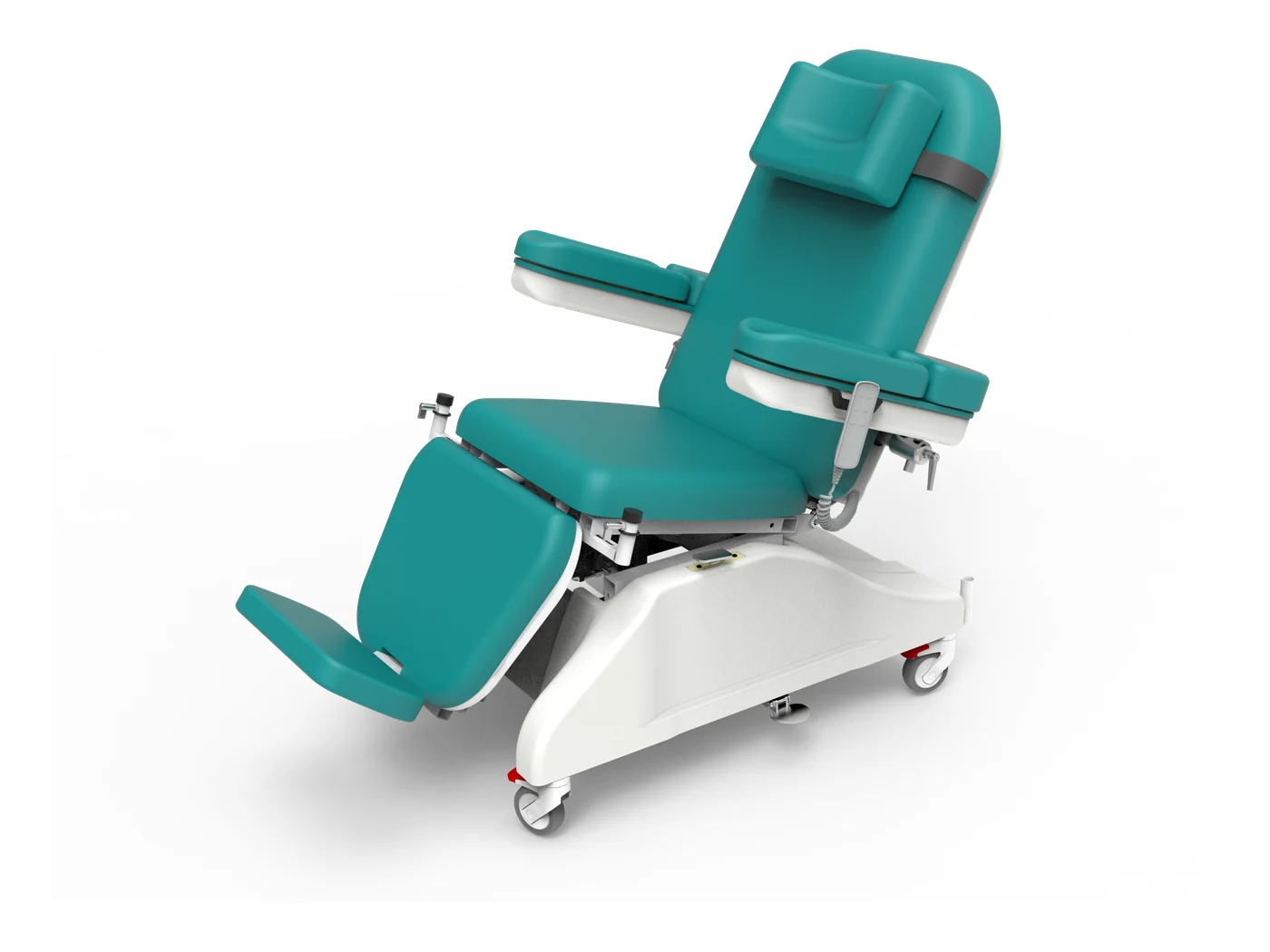
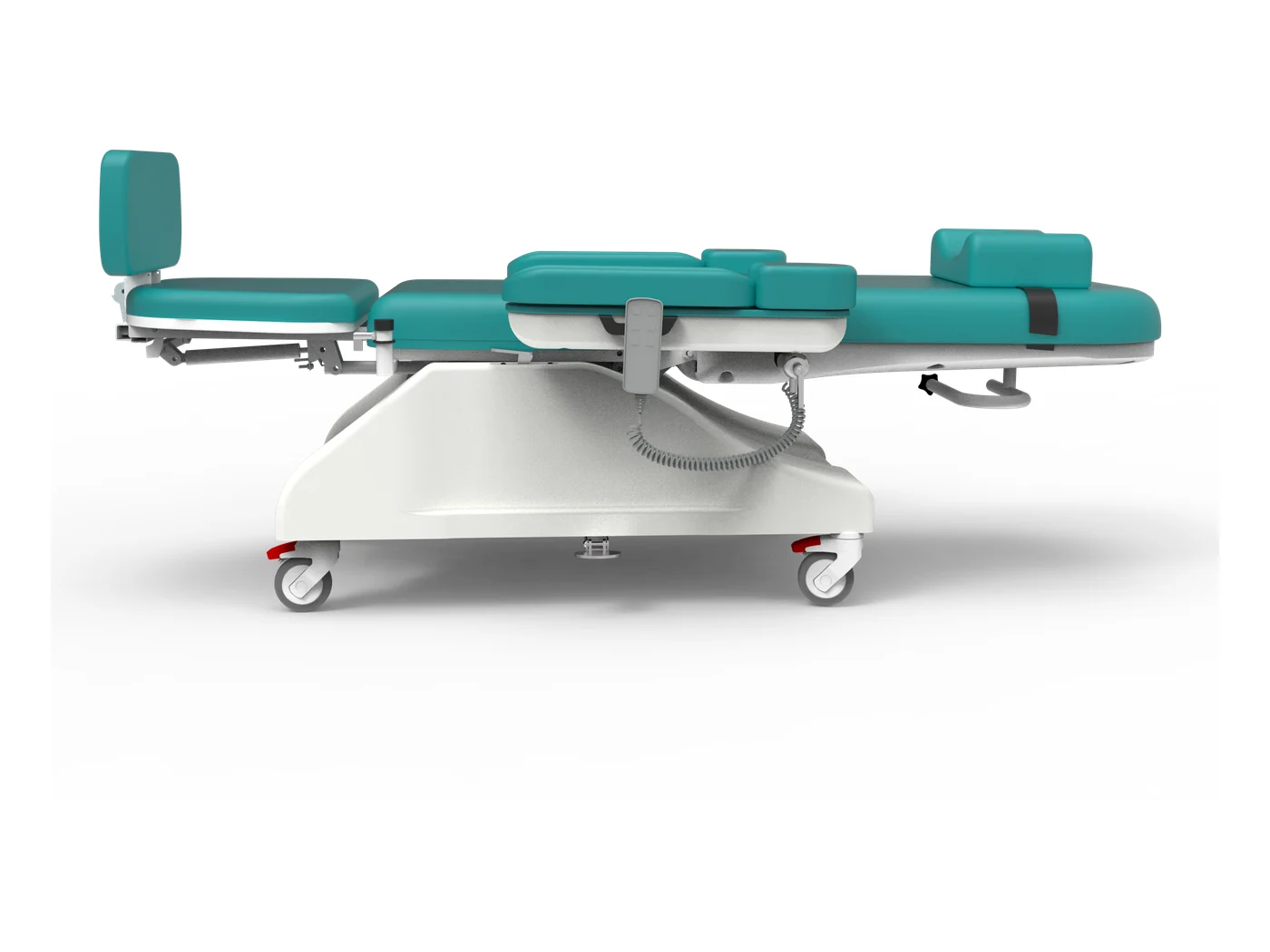
Backrest to 75° for cannulation, semi-recumbent for a long session, back and knee raised for fistula access, flat for a hypotensive patient, and a reclined position with the knee break up that takes the pressure off the sacrum during a four-hour run.
What sets the PY-YD-230 apart
1. Two gas springs, not one. On the PY-YD-211 a single spring sets both armrests to the same height. Here each side has its own, and each armrest also flips up through 90° and swings out through 70°. In practice that means the access arm can be lifted and angled for a fistula while the other arm stays where the patient wants to rest it.
2. PVC instead of PU. Polyvinyl chloride takes repeated wiping with chlorine-based disinfectant better than polyurethane. If your protocol is a full surface wipe between every session — which is most units in China and much of Southeast Asia — PVC keeps its colour and surface longer. It is also easier to repair a small tear in PVC.
3. The footrest telescopes 100 mm. Patients over about 180 cm usually end up with their heels off the end of a fixed footrest, which loads the calf and makes them slide down. The footrest on the 230 extends on its own actuator, so the platform length matches the patient rather than the other way round.
4. It is 7 kg heavier than the 211, and that is the whole difference. 70 kg against 63 kg. The frame, the 550 mm seat height, the castors and the 240 kg working load are the same. If you do not need independent armrests or chlorine-grade upholstery, the 211 is the cheaper chair for the same treatment positions.
Colourways
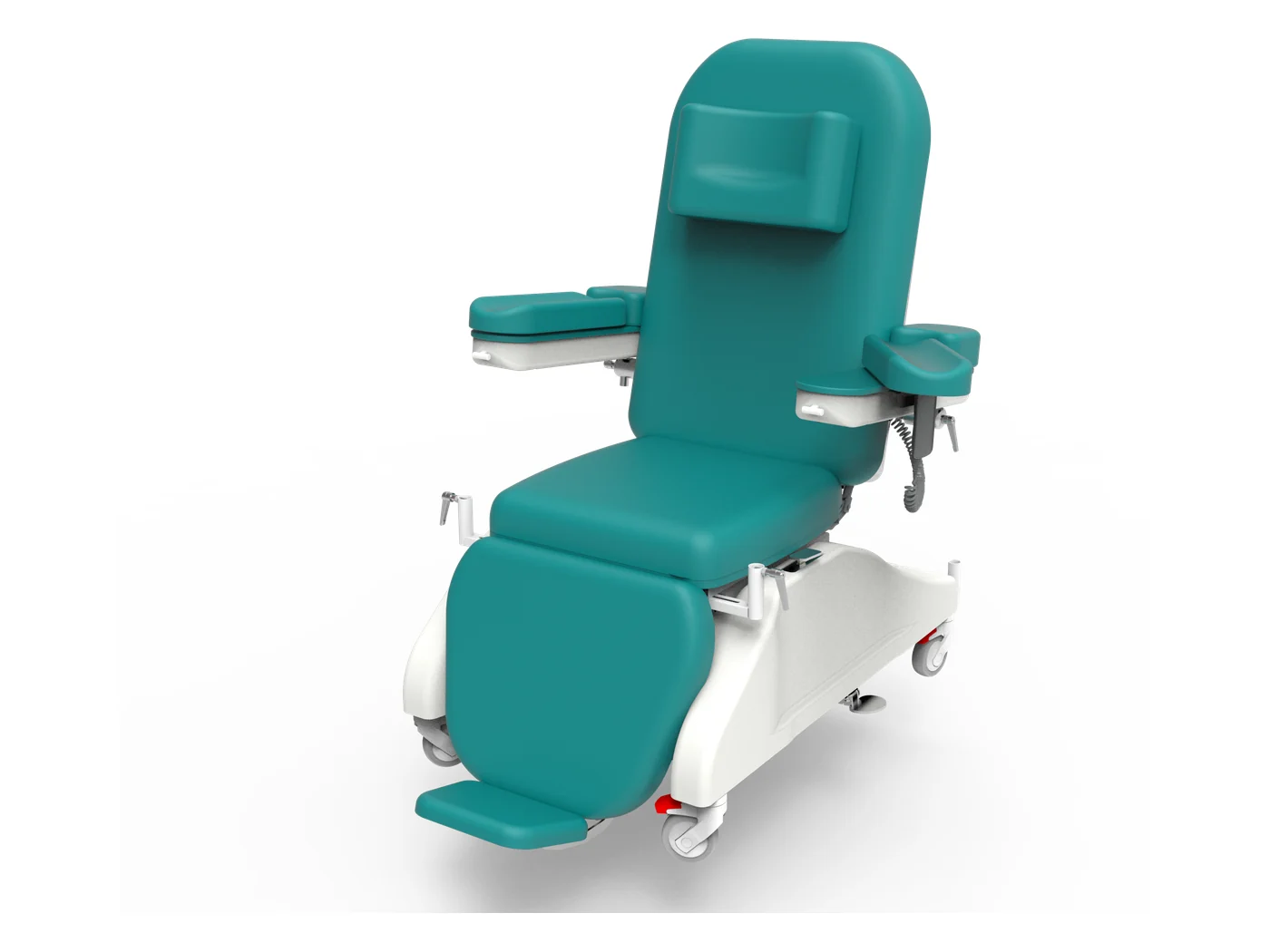
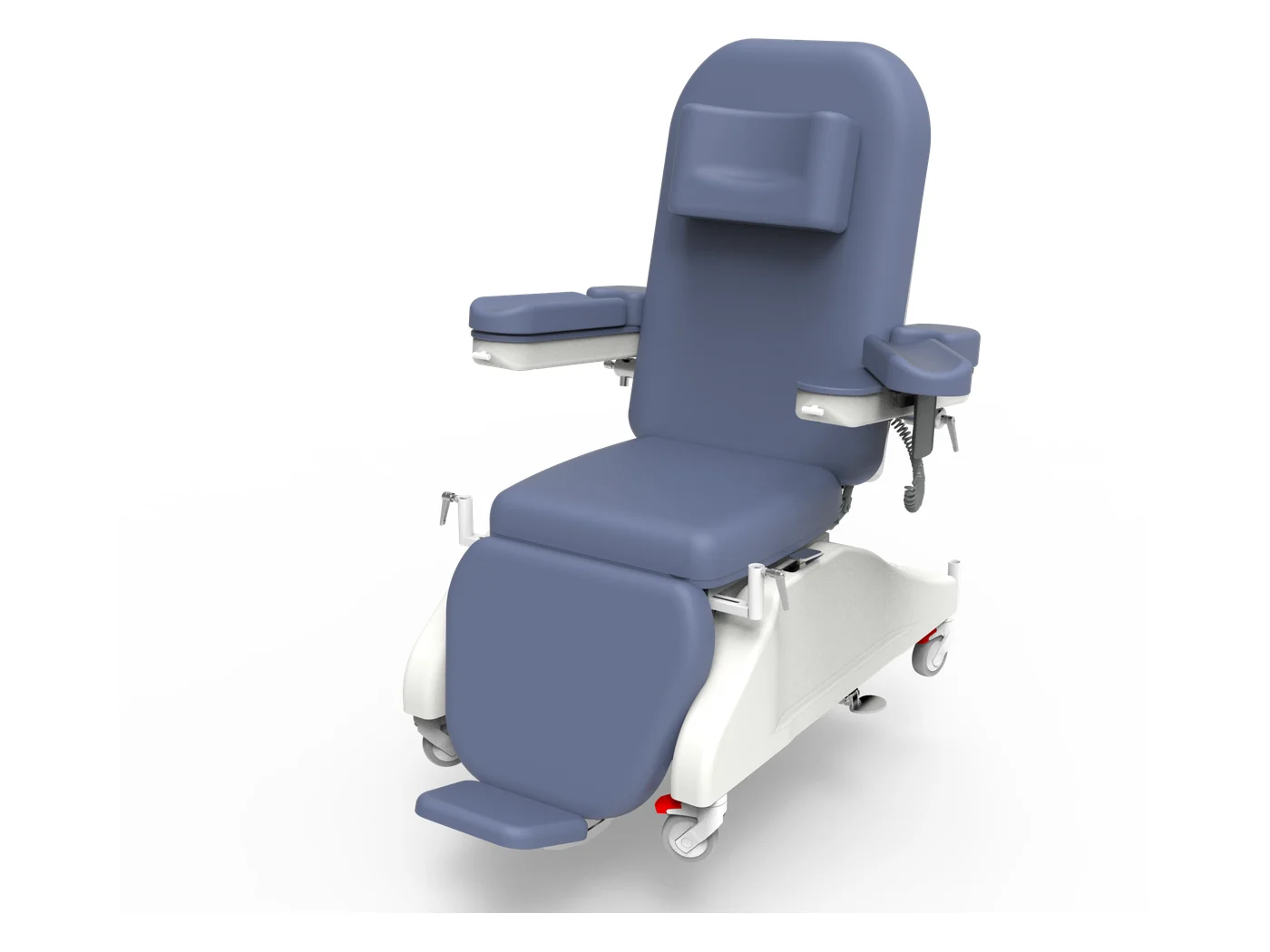
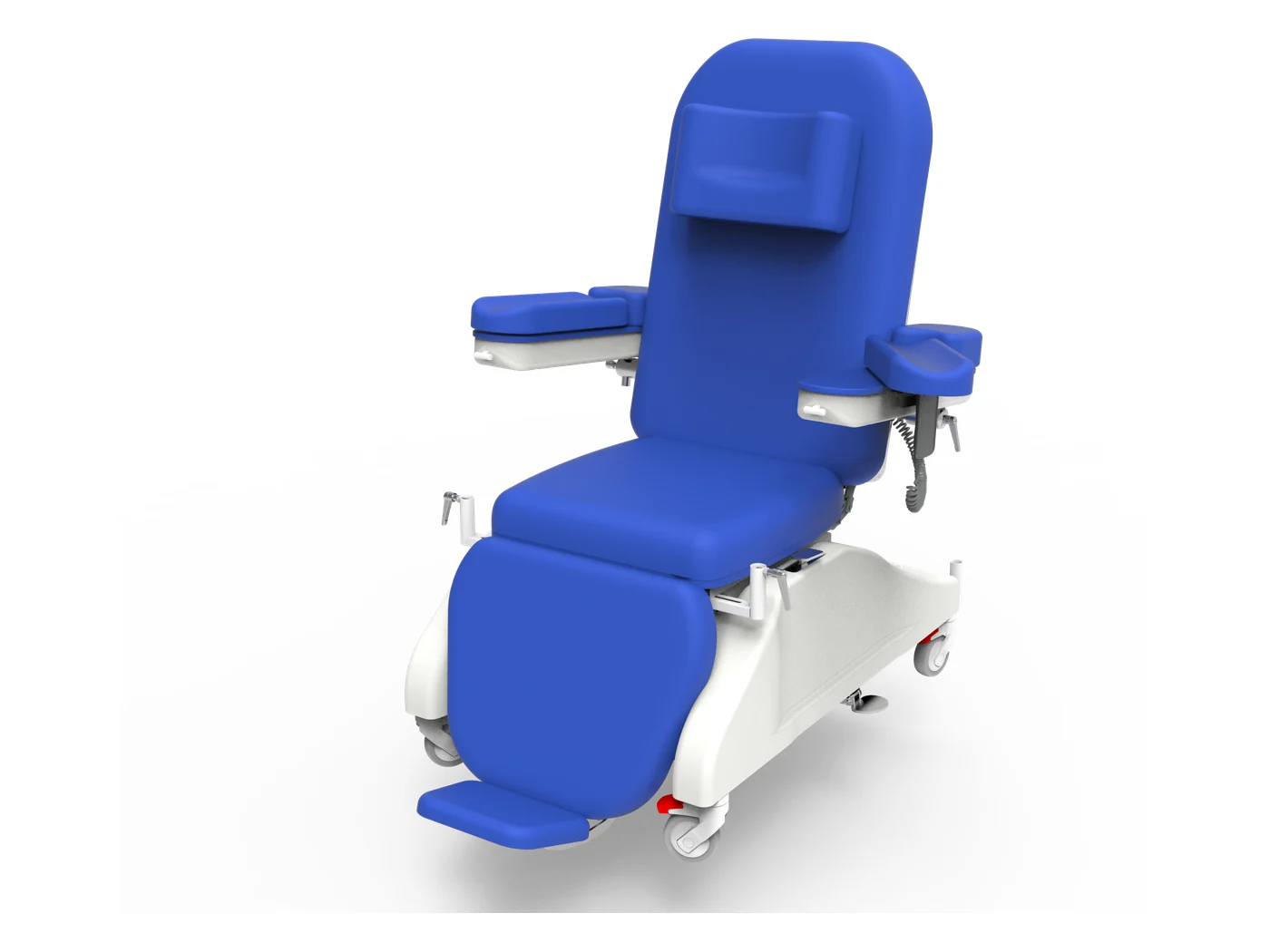
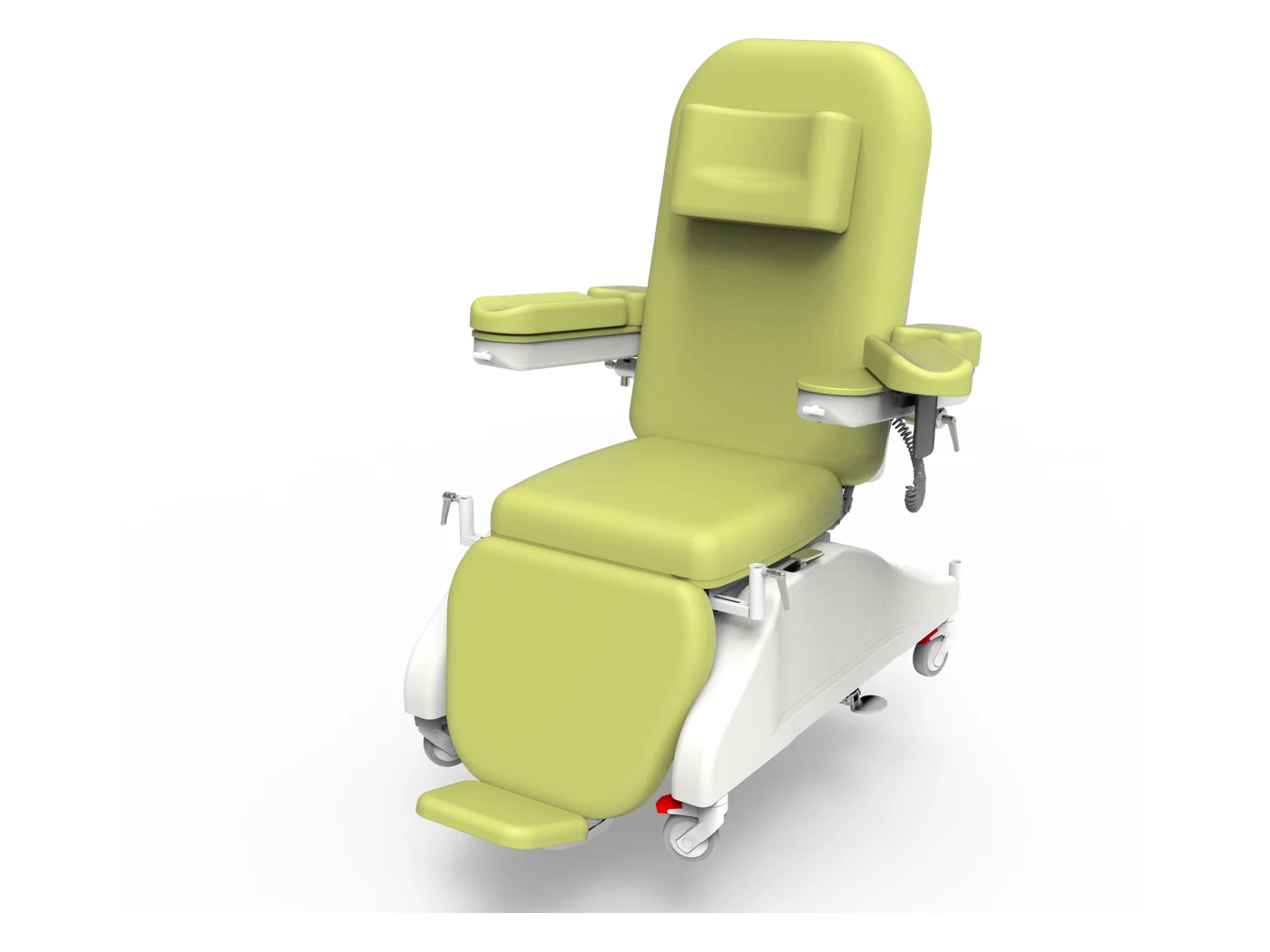
Five standard upholstery colours, all in PVC. Other colours are available for OEM orders.
230 or 345?
The 230 is the top of the fixed-height range. The step up to the PY-YD-345 buys electric height and a wider seat, and costs about a third more weight.
| PY-YD-211 | PY-YD-230 | PY-YD-345 | |
|---|---|---|---|
| Actuators | 2 + 1 gas spring | 3 + 2 gas springs | 5 |
| Seat height | 550 mm, fixed | 550 mm, fixed | 550–800 mm, electric |
| Length, flat / seated | 1980 / 1130 mm | 1990 / 1250 mm | 1945 / 1503 mm |
| Seat width | 600 mm | 600 mm | 640 mm |
| Upholstery | PVC over foam | PVC over foam | PVC over foam |
| Net weight | 63 kg | 70 kg | 102 kg |
| Castors | 4 inch, individual brake | 4 inch, individual brake | 5 inch, central lock |
| Best for | Fixed-height stations on the tightest budget | Chlorine-wiped units that need independent armrests | High-throughput units that need electric height |
Specifications
| PY-YD-230 — electric dialysis chair | |
|---|---|
| Model | PY-YD-230 (230A-4.0 upgrade) |
| Length, flat / seated | 1990 mm / 1250 mm (±20 mm) |
| Overall width incl. armrests | 900 mm (±20 mm) |
| Seat cushion | 600 × 560 mm (±20 mm) |
| Backrest cushion length | 900 mm (±20 mm) |
| Legrest cushion length | 440 mm (±20 mm) |
| Telescopic footrest travel | 0–100 mm |
| Seat height | 550 mm fixed (±20 mm) |
| Armrest | 600 × 170 × 75 mm, 240 mm above seat; flips up 0–90°, swings out 0–70° |
| Base shell | 1080 × 700 mm |
| Castors | 4 inch single-wheel, individual brake on each wheel |
| Headrest | 400 × 230 × 80 mm |
| Backrest angle | −12° to 75° (±3°) |
| Legrest angle | −70° to 12° (±3°) |
| Seat tilt | 0–12°, manual lever |
| Actuators / gas springs | 3 / 2 |
| Safe working load | 240 kg |
| Net weight | 70 kg (±3 kg) |
| Upholstery / frame | PVC leather over high-density foam / Q235 steel tube |
| Power supply | AC 110–240 V, 50/60 Hz, 140–180 W |
| Operating environment | 0–35 °C, 10–85 % RH |
FAQ
What is the difference between the PY-YD-211 and the PY-YD-230?
Three things: the 230 has two independent gas springs instead of one, a third actuator driving a telescopic footrest, and it is 7 kg heavier. The frame, the 550 mm fixed seat height and the 240 kg working load are identical.
Why does the upholstery material matter?
Chlorine-based disinfectants attack polyurethane over time — the surface goes tacky and then cracks. PVC resists it. If your unit wipes the chair down between every session, the PVC on the 230 and the 345 will outlast PU. If you only clean at the end of the day, the difference is small and the 211 is fine.
Can the two armrests be set to different heights?
Yes, that is the point of the twin gas springs. Each armrest also flips up through 90° for a transfer and swings out through 70° to clear the patient's side.
Does the 230 have electric height adjustment?
No. Seat height is fixed at 550 mm. Electric height from 550 to 800 mm is on the PY-YD-345.
Can it be used for blood collection?
Yes. Backrest to 75° with the access armrest lifted is the standard phlebotomy setup, and the chair is listed for blood collection, infusion and dialysis.
Is the chair certified?
CE marking, manufactured under ISO 9001 and ISO 13485. The current certificate pack goes out with every quotation.
Request a quotation for the PY-YD-230 — send your quantity, destination port, voltage and upholstery colour to our sales team and we will reply with pricing and the current certificate pack.
PreviousContent:PY-YD-211 Electric Dialysis Chair
NextContent:None
